Building Taiwan’s first national drone program for emergency responders
When typhoons, earthquakes, or other disasters strike Taiwan, emergency responders increasingly rely on drones to help them save lives.
In May, Spirit of America, first responders from across Taiwan, and first responders from all over the United States came together in Oregon to build a shared standard for how first responders use unmanned aerial systems (UAS) in Taiwan. This new national program will help firefighters and rescue teams coordinate and integrate their operations, strengthening their ability to respond during disasters.
I joined our Asia-Pacific team on the ground in Oregon to get a firsthand look at the training and to meet the instructors and trainees dedicated to perfecting the new doctrine for UAS use. What I saw not only impressed me but reaffirmed my view that the Taiwanese are dedicated to innovation and improving their civil resilience.
Drones have become an increasingly valuable tool for emergency response. They allow search and rescue teams and firefighters to survey remote areas, enter buildings that are at risk of collapsing, and provide an extra set of eyes from a higher vantage point and, in some cases, provide visibility through smoke, barriers, and other obstructions. For Taiwan, prone to a whole host of natural disasters from flooding and typhoons to earthquakes and mudslides, these unique capabilities can have an outsized impact on their emergency operations.
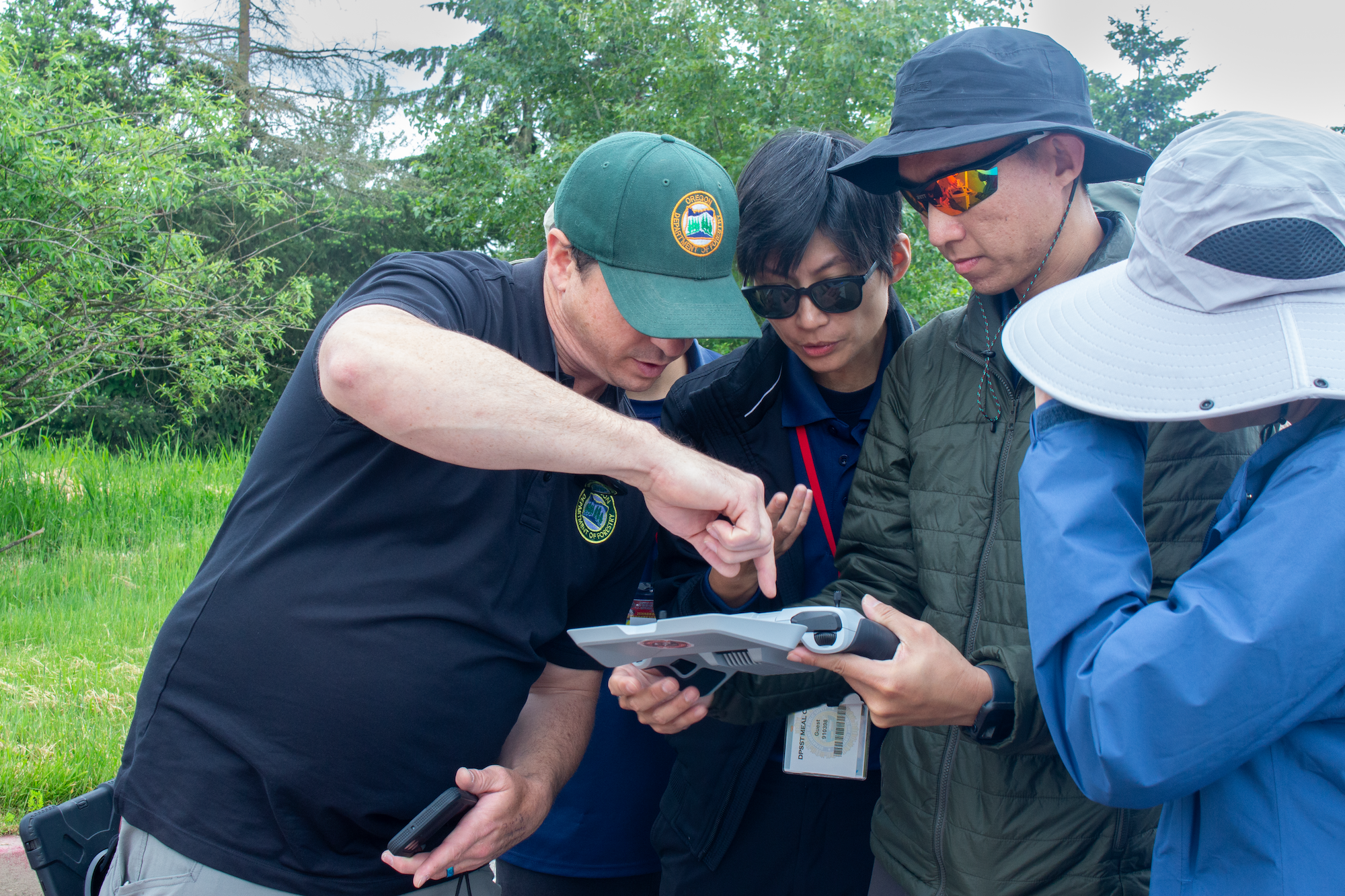
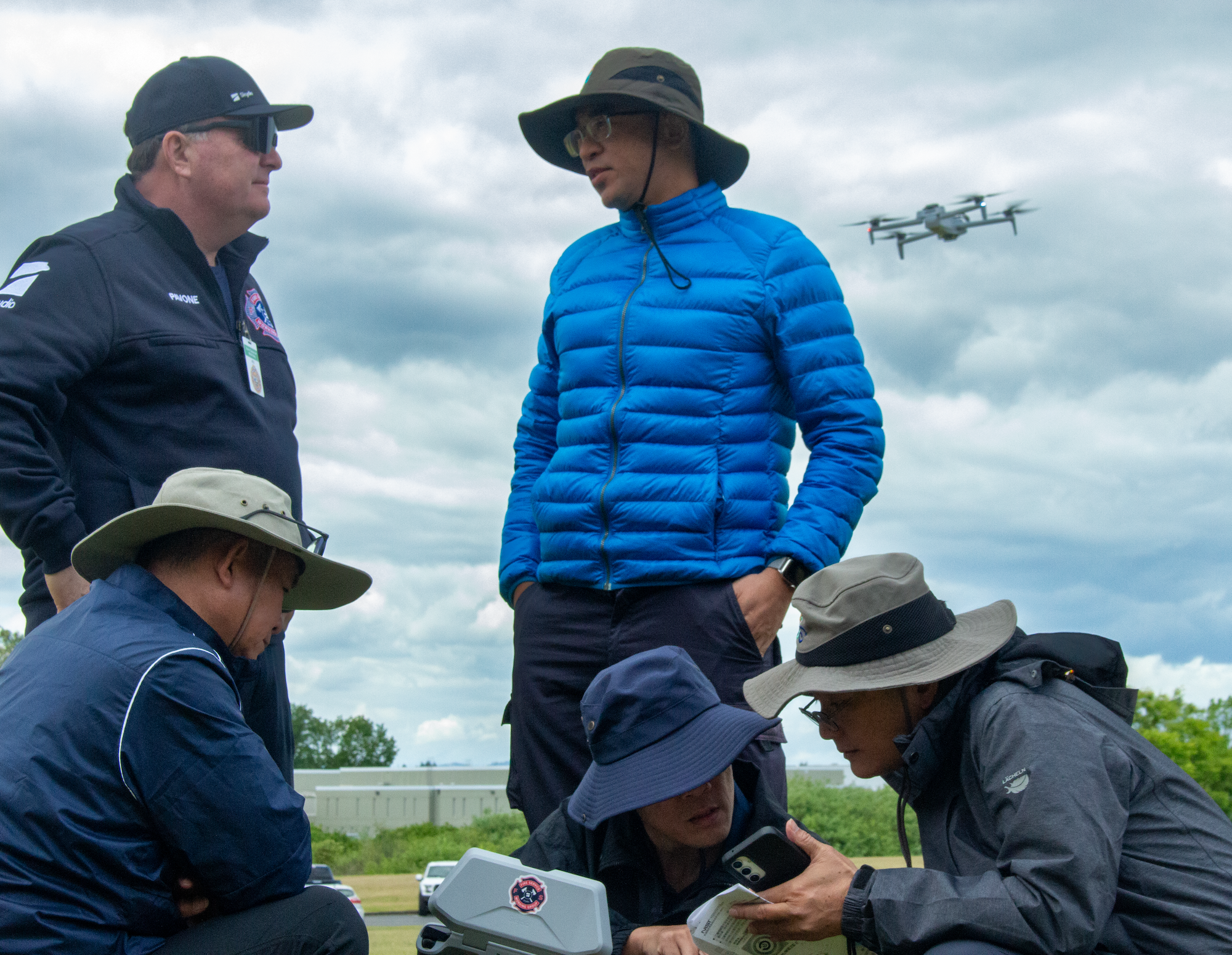
A U.S. instructor troubleshoots drone controls with Taiwanese first responders (Photo by Jolene Fischer for Spirit of America).
Taiwan’s 15,000 first responders have historically relied on a patchwork of locally driven UAS programs without common operating baselines or cross-communication and collaboration. As cities such as Tainan pioneered their own programs, our partners in Taiwan identified a need for a central, standardized curriculum that would facilitate common skills, training, and equipment.
Spirit of America is helping make that possible by supporting Taiwan’s first national first responder UAS program. Through a “train-the-trainer” model led by Taiwan’s National Fire Agency (NFA) and facilitated by the state of Oregon, two dozen instructors will be certified in U.S. National Institute of Standards and Technology-based flight standards, curriculum, and equipment. They will then return home prepared to scale a national UAS training pipeline across Taiwan’s 22 fire departments and 700 fire stations.
“This training is helping us build better collaboration and understanding between government agencies. In the future, should we encounter earthquakes, typhoons, major accidents, or other disasters, we can deploy support in a more consistent and efficient manner, making our over disaster relief capabilities more comprehensive,” said Brigade Commander Yang Minzheng of the New Taipei City Emergency Rescue Association.
A Taiwanese-piloted drone takes off during flight training in Oregon (Video by Jolene Fischer for Spirit of America).
The effort has unfolded in phases. In November 2025, a group of American instructors traveled to Taiwan to establish a national standards framework and build support among stakeholders. In May, trainee certification and flight training kicked off at the Oregon Department of Public Safety Standards and Training campus, where Taiwanese first responders were able to stretch their legs and utilize the open airspace for advanced flight techniques.
The training followed a U.S. National Institute of Standards and Technology framework, and it was great to see a representative of the U.S. federal government there alongside state and local trainers supporting the program. The American instructors — experienced first responders from California, Oregon, Massachusetts, and Maryland — coupled the Taiwanese trainees’ indoor classroom sessions with hands-on flight sessions outdoors, utilizing the entire training facility’s airspace. This allowed for not only close-in navigation, obstacle avoidance, and maneuvering, but long-distance flight and operating in conflicted airspace as well.
The camaraderie I witnessed was exceptional: everyone came to the training with a learning mindset, and several U.S. instructors remarked that they had learned from the Taiwanese first responders as well. Because nearly all the Taiwanese first responders had UAS flight experience, the instruction quickly moved basic operations into advanced techniques.
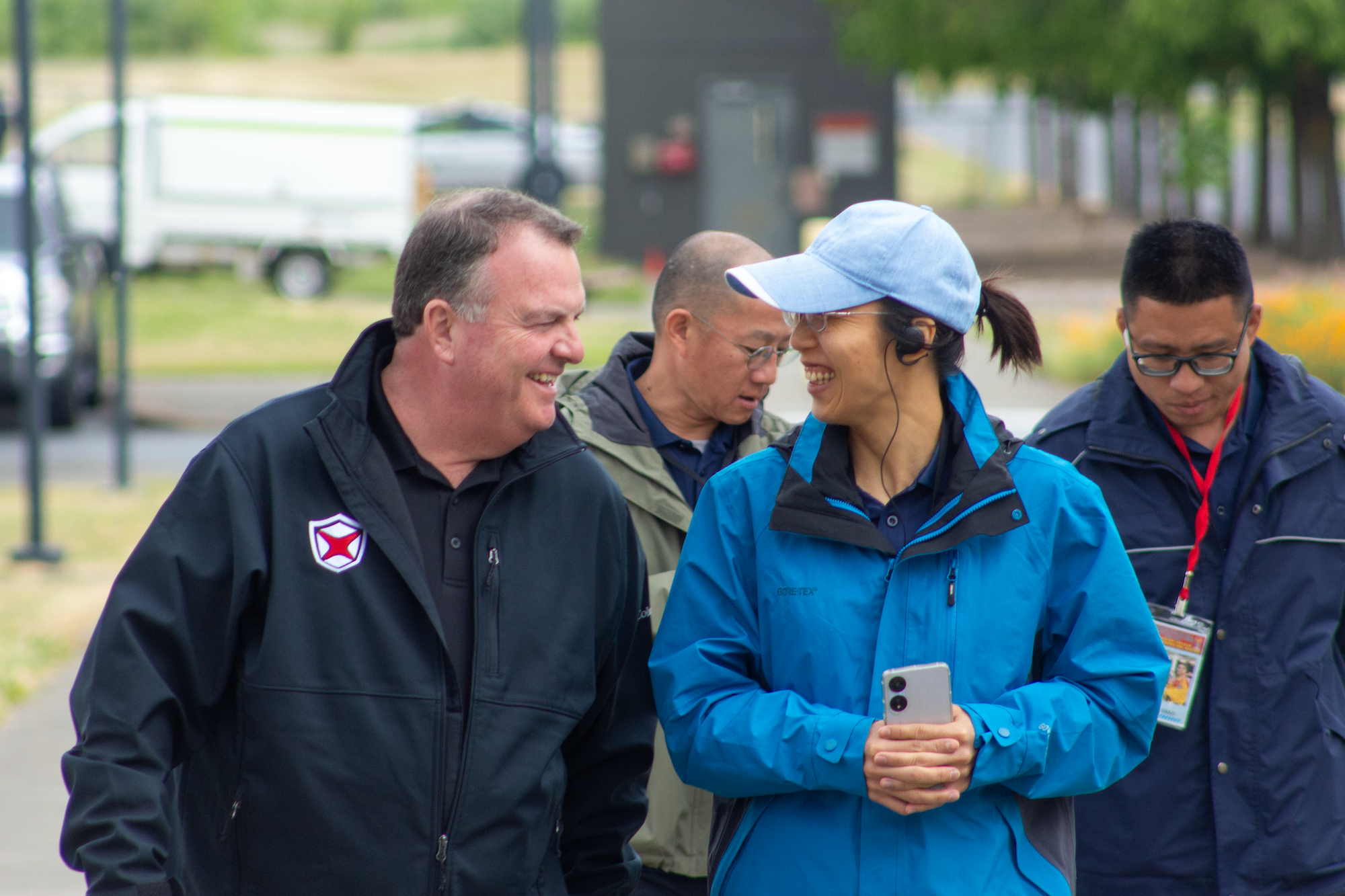
The U.S. instructors and Taiwanese trainees share a lighthearted moment during training (Photo by Jolene Fischer for Spirit of America).
Taiwan’s emergency response system faces serious risks without a standard, national UAS framework and curriculum. This fall, the instructors will travel back to Taiwan to validate and operationalize the program, but the trainees are already enthusiastic about what the program means for the future of UAS in emergency response in Taiwan.
“Our pilots have come here, seen new things, and their eyes are wide open. Once we go back to Taiwan, our pilots will allow this learning experience to flourish, like a seed taking root, sprouting, blossoming, and bearing fruit… We are grateful to Spirit of America for sponsoring the necessary assistance to enable us to receive this training,” said Liu Hong-Ju, Brigade Leader for the NFA’s Special Search and Rescue Team.
Spirit of America is uniquely positioned to support the Oregon-Taiwan partnership as Taiwan’s National Fire Agency establishes a national first responder UAS program. By helping design national standards, certify instructors, and build the doctrine needed for Taiwan to scale and integrate this capability across the entire emergency response system, we are strengthening Taiwan’s ability to respond when disaster strikes. We are proud to support Taiwan as they build a more resilient future.
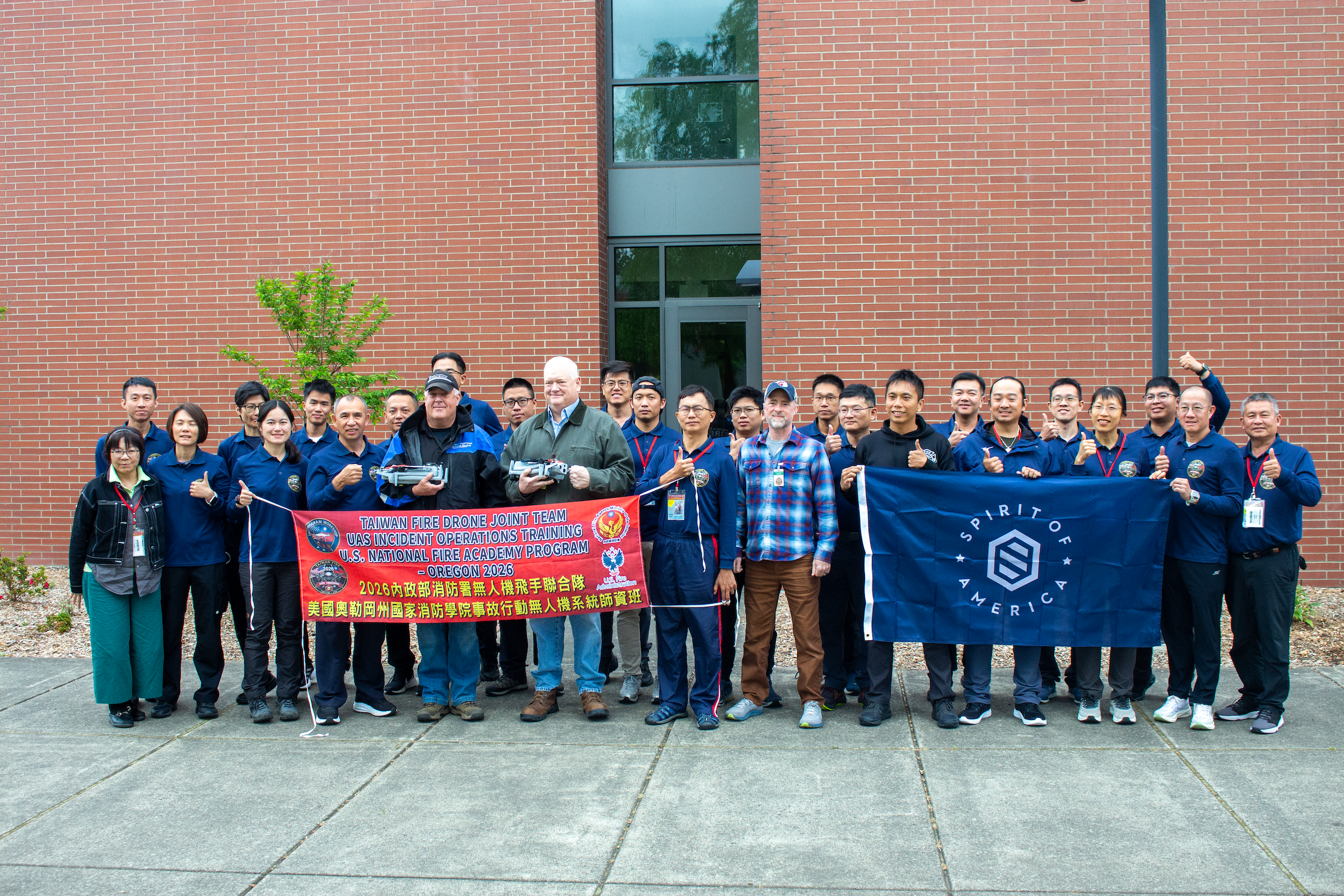
Spirit of America stands proud with Taiwanese first responders (Photo by Jolene Fischer for Spirit of America).

Anthony Nguyen is the marketing manager for digital content and engagement at Spirit of America. He brings more than a decade of experience working at the intersection of public policy and digital communications.